The Muse + Source
Dearest Meaning Maker,
Welcome back to the Muse-Letter! I am so excited to bring more Coherence to your inbox. If you missed the first Muse-Letter and would like more background on what we’re creating, check out this post.
As the Muse-Letter progresses, I had anticipated, and still do anticipate, the structure and creation to evolve as the Collective does. And our first evolution has already arrived! It’s always been important to me to create The Cohere Collective from a collectivist perspective; this is not just about me and my story, but about us all coming together to support one another in our evolving communion with the Self. So, I want to include you and your inspirations and insights in the Muse-letter as well to accurately reflect our community!
Each week, I will remind you of what next week’s Theme and Pillar will be, and if you have a Coherent song, quote, or piece of inspiration that speaks to that theme, you can send it to us to be included (more details below).
Today’s Cycle Theme and Pillar of Coherence: Muse + Source
This week, we’re exploring the Second Pillar of Coherence: Source. What does it mean to feel connected creatively to Source? Is Source in some way our largest Muse? Is creative inspiration a spiritual experience? We’ll explore these thoughts, and so much more, in this week’s Muse-letter!
Next week’s Cycle Theme is still the Muse, and we will be exploring the Third Pillar of Coherence, Other, which manifests as Community. You can email connect@thecoherecollective.com with the subject line “Muse-Letter: Muse + Other” if there are any inspirations you have in relation to the theme! Please provide a source and links to anything you send our way, and please submit them by Sunday evening.
I hope you enjoy! Here’s to our weekly dose of meaning, connection, and Coherence!
Smack,
Reese
FIRST LIGHT | an inspiration
“You are the Universe expressing itself as a human for a little while.”

This week’s song is Everyday I Write the Book by Elvis Costello
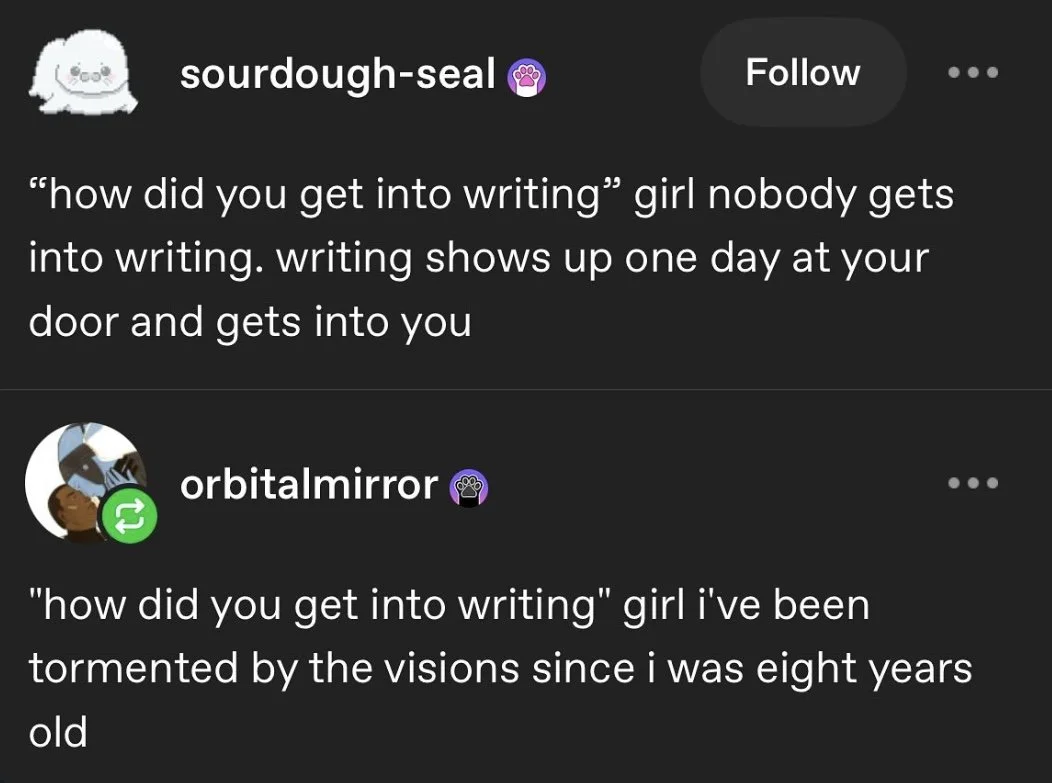
The Muse can’t be denied, and is usually long felt.
From goth.worm on Instagram
RISING SUN | an essay
In the Beginning, We Created: On Spirituality, the Muse, and the Paradox of Creation
Creativity is inherently a spiritual act. Historically, we cannot disentangle our human relationship to the sacred from our relationship to human works. Linguistically, we can tie “creativity” to “creation” quite obviously, and any numinous tradition has a creation myth to either metaphorically or literally (depending on your personal interpretation) ground the belief system into application.
If you were to begin researching the history of religion, your studies would start with the creation myth, as the creation myth is also the start of all religions. Across the vast number of creation myths we now have, we can also find some very similar principles and requirements. In Thomas King’s The Truth About Stories, we read, “The truth about stories is that that’s all we are… So you have to be careful with the stories you tell. And you have to watch out for the stories that you are told. But if I ever get to Pluto, that’s how I would like to begin. With a story… But which story? That's the question. Personally, I’d want to hear a creation story, a story that recounts how the world was formed, how things came to be, for contained within creation stories are the relationships that help to define the nature of the universe and how cultures understand the world in which they exist.” (10). King’s beautiful description of creation stories offers, not only an explanation of what is found across nearly every creation myth we have access to, but also why we find these themes.
From the very beginning of time, our relationship to the divine has relied upon the human being’s capacity to create through storytelling. And through our creation of the creation myth, we create g-ds¹ who have the divine ability to create universes. In the beginning, you can already sense the paradoxical nature built into creation. Human beings have always, and likely always will, strive to understand, “Why?” What’s the meaning of life? Why am I here? Why is there something rather than nothing?
And in order to answer our own question of “Why was I created?” our answer was to create. In the absence of knowledge of creation, we were compelled to create. And so, human beings created our own creation. In the very act of beginning to explain creation, we rely upon it. And it is within this paradox that creativity rests. This is the dialogue we enter into when we set off on a creative path. We are communing with a history of existentialism, oral history, tribe-specific g-ds, and the inexplicable but inexorable human capacity for curiosity.
To create is to mimic the g-d we created.
Before we discuss communing with this vast and rich history as present creators, it’s important to ground that discussion in my current conception of our shared metaphysics. If we are communing across time (perhaps in Dreamtime, a concept that comes out of Aboriginal Australian myth) with our ancestors and descendants, with our ranging conceptions of creation, and with g-d through our relationship to creation, we should discuss how I am using the term g-d.
Firstly, I think it’s obvious that I find human beings and humanity to be on the same plane as g-d in terms of power (not dimension). Western thought tends to lock us into linear and hierarchical thinking that is largely inaccurate in material reality and unhelpful in philosophical thinking. Placing any being, g-d or not, above the human being already begins to frog the sweater of religions and belief systems that rely upon an omni-g-d². If g-d was created by us to both create and save us, are we not creating and saving ourselves?
It is paradoxical thinking like this that has led me to develop what I call a radically inclusive spiritual worldview. Many thinkers come to these realizations and deconstruct the possibility of any spiritual tradition being remotely true. Other thinkers will then develop an opposite pluralistic approach that holds all religious traditions to be true, in their own flawed ways. I certainly fall more in the camp of the latter, but I like to take it even further. What if not only all traditions are true in the sense that each of our experiences are true, but what if every individual’s relationship to g-d must be true because we are the original creators of g-d, so the way any of us creates g-d speaks that precise incarnation of the divine into being?
Bring in the idea of the great I Am or imago dei; some of the most hierarchical and self-imploding religions actually build their foundations on this very paradox. It’s right there in their own texts, but the human mind can’t conceptualize the cyclical and expansive notion that g-d creates us because we created g-d. But stepping into the role of the observer, and taking in the foundation of the paradox that exists all around us and within us, we can see how that spark of divinity is the deeply sacred part of each of us that is g-d in our own way, and that in combination, creates g-d as well. G-d is, in a sense, fractal images of our creation stories. And what is us living life if not all of us writing the creation story of the self every day?
My goal in this essay is to discuss the Muse and spirituality and how that connects us to Coherence, so I am going to leave my discussion of the numinous foundational metaphysic of life here, but if you want to learn more or dive deeper into these concepts, check out my video on the nature of paradox here.
Turning to what this understanding of creation implies about our relationship to the Muse, let’s go back to the foundation here too.
Etymologically, both “creativity” and “creation” use the root word “create.”
Create /krēˈāt/ (v.)
To bring into being.
From Etymonline.com, create comes from Latin creatus, past participle of creare "to make, bring forth, produce, procreate, beget, cause," related to Ceres and to crescere “arise, be born, increase, grow.”³
When I step into creativity, I deeply feel like I am communing with the divine. Relying on my worldview, this is both a communion with g-d and with myself, which are one and the same in the mirrored nature of creation. When we contemplate the Muse, and as I have been reflecting on last week’s prompt of the relationship between the Muse and the Self, I have come to understand that the energy of the Muse is the liminal space in the mirroring between myself and g-d. The Muse is the mirror of the great I Am. How powerful that when we step into true ownership of self-sovereignty, claiming I Am, we are also claiming the powerful identity of the Abrahamic Yahweh, and claiming the presence of our humanity. Eckhart Tolle writes, “You are the Universe expressing itself as a human for a little while,” and when we step into an act of creativity, we walk the tightrope of hubris, acknowledging the infinite that exists within our finite experience, seeking to birth something that can outlive this physical incarnation of individuality.
In the etymology, we also see the language,“arise” and “grow,” two words that new-age communities like to ascribe to spiritual awakening and ascension. Again, while I think this understanding is incorrect from a cyclical and non-hierarchical perspective, I still think that the linguistic connection between creation and spiritual experiences is notable. Further, the language around “procreation” and “producing” calls forth an idea of partnering with the divine as a human. Mirroring the very act of sexual procreation, there is a metaphorical (a)sexual procreation in the act of creativity. As an individual, you partner with your psychology, experiences, embodied states, and emotions as well as with the divine and g-dly Muse to create something external to yourself. It is a powerfully internal and individual experience, and deeply reliant upon the externalities of the Muse, whether that be memories and personal psychology, or divine and g-dly energies. But within my worldview, these two states of externality aren’t separate.
To attempt to wrap up this conversation, I want to offer a suggestion that may help connect some of the dots I have sketched. Consider the Muse in a Jungian archetypal sense. Perhaps the Muse is an energy that exists as a part within all of us, as well as a part that exists on some universal, Platonic level. When we partner with the Muse, we are partnering with the deep cycles of the universe and human nature. Whatever you believe about the causation of these cycles, their existence is deeply felt by all of us, and they are deeply correlated with an array of practices across worldviews. These cycles are found in spiritual practices such as tarot, astrology, the I Ching, reiki, shamanic practices, and historic and Indigenous healing and medicine practices. They’re found in religious traditions and sacred texts such as archangels, saints, daily devotionals, church rituals, and prayer. They’re found in academic traditions such as literature, physics and quantum physics, the movement of the planets, and the rotation of atoms. They’re found in nature, ingrained in oceanic patterns, sacred geometry in sunflowers and honeycomb, the moon and the tides. But most importantly, these cycles are found in you.
The body’s natural cycles, the shape of your eyes, a woman’s relationship to monthly cycles and her sacred ability to create life. The movement of the atoms at your very core, the cells that hold and construct worlds within you, the microorganisms we can’t even begin to count. Every heartbeat, every breath is an invitation into this divine cycle. And you are the crux, the epicenter, the creator and created, of this reality. And every act of creation is in relationship to these patterns, to humanity, to you.
So, the connection between Source and the Muse? It’s you.
HIGH NOON | a practice
The Art of Prayer
If you’re brand new to meditation or have been meditating for years, this practice is for you! The below exercise will be a soft entry into trying meditation if you find that you struggle, or a fun exercise to freshen up your routine practice.
To begin, gather any art or creative supplies you may have for a short and simple creative act. If you have a preferred method of creation, like scrapbooking, art journaling, drawing, or writing, use whatever materials you have easy access to. At minimum, you’ll need a piece of paper and a writing utensil. Once you have your supplies, set up a sacred space where you won’t be interrupted for the next 10 minutes. For my meditative practices I always like to add in some “bells and smells,” or in other words, a gentle instrumental playlist or sound bowls going in the background and some incense or a candle going to really prepare all my senses for communion.
When you’re ready, sit in any position that is comfortable with your supplies on a surface in front of you. Take a deep breath, and begin with a simple body scan, starting from your toes and relaxing each portion of your body as you rise through your legs, to your torso, through your arms, and finally your head. If you’ve never completed a body scan before, check out this video.
Once you feel relaxed, invite in the Muse. Perhaps say in your mind, or outloud, a piece of gratitude for the Muse. And then when you’re ready, invite the Muse to guide your creative practice. You may write, draw, sketch, paint, cut and paste, or just scribble. Feel free to keep your eyes open or closed, whatever feels the most natural, and let the Muse guide your creation for the next few minutes, trusting where your intuition takes you.
Once the time is up, thank the Muse for guiding you, and look at your creation!
This exercise is for you to enjoy and use however you feel it will best serve you! Feel free to modify, eliminate, or add as desired.
Journal Prompts:
Did any thoughts or insights come up during this exercise? Why did these thoughts arise?
What did it feel like to invite in the Muse? Did it feel like an external entity or a piece of yourself?
If you are used to practicing creation, how did this approach feel the same or different from your typical process?
Look at your final piece. What feelings arise as you contemplate it?
GOLDEN HOUR | a podcast
The Unwritten Aesthetic
Stop Performing Your Life and Just Exist: You are Already Meaningful
Check it out on YouTube, Spotify, or Apple Podcasts.
Let’s unpack the quarter-life crisis (yay...) From existential dread to redefining purpose, we at least know one thing: life isn’t a stage, it’s a soup!
In this episode of The Unwritten Aesthetic, Reese Brown and Lauren Bush celebrate the space between their birthdays and dive deep into what it means to reach quarter-life. From the awkwardness of birthday songs to existential philosophy, they explore how we define meaning, purpose, and identity in our mid-twenties.

Making Meaning: NEW EPISODE
How to Talk to the Universe – And Actually Hear Back: Cultivating Your Relationship with The Angels, Spirit, and Self
Check it out on YouTube, Spotify, or Apple Podcasts.
What if joy isn’t the goal of life, but the strategy for living?
Join host Reese Brown as she sits down with Angel Reiki Master, Host of the Intuitive Wisdom Podcast, and Meaning Maker K. Margaret Solorio for a deeply grounding conversation that explores how to co-create with Spirit, distinguish anxiety from intuition, and raise your vibration through joy and surrender.
Reese and K. Margaret also explore mediumship, space-centered Reiki, and how each of us are just Spirit dreaming. This episode of Making Meaning reminds us of the power of deep and connective conversations and that purpose is already within us – we just need to remember who we are and come home to ourselves.
TWILIGHT | a recommendation
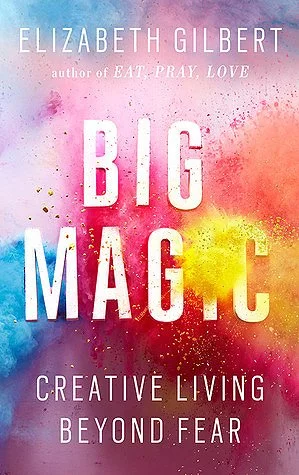
While I certainly have some disagreements with the cosmology and phenomenology of Gilbert, Big Magic is a powerful entryway into practicing creative confidence and discovering a relationship with the Muse from historical and practical perspectives.
Specifically in terms of the relationship between the Muse and Source, and how creativity can be a spiritual experience, I would pay attention to Gilbert’s discussion of the Muse and Creativity as a relationship to be cultivated, not something to be owned within the individual.

I had the pleasure of being invited on the Life Stories Podcast to share about what drove me to create a podcast about life’s biggest questions, my experience living abroad in Italy, and how I bridge the practical side of life with the search for purpose. Watch the Life Stories Podcast on YouTube, listen on Spotify, or check it out wherever you get your podcasts!
WITCHING HOUR | a reading
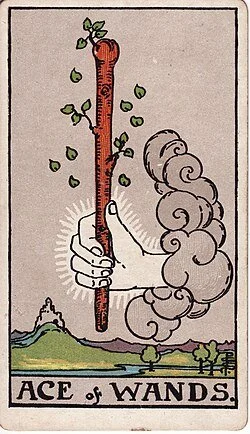
The Ace of Wands
Smoky clouds in the Tarot tend to reference a connection to the divine, and the Wands represent our creative and fiery energies. The Ace of Wands represents the divine spark of inspiration that can strike at any moment, if only we have ears to hear. Anything could be your Muse – look around! Do the clouds out your window inspire anything? Does the sound of your air conditioner prompt a thought? Does the feeling of your chair remind you of a memory? Source is all around us, waiting to see how the conscious mind can be sparked. The sacred is in mundanity, and the mundane is divinely sacred.
DREAM SWEET | an update
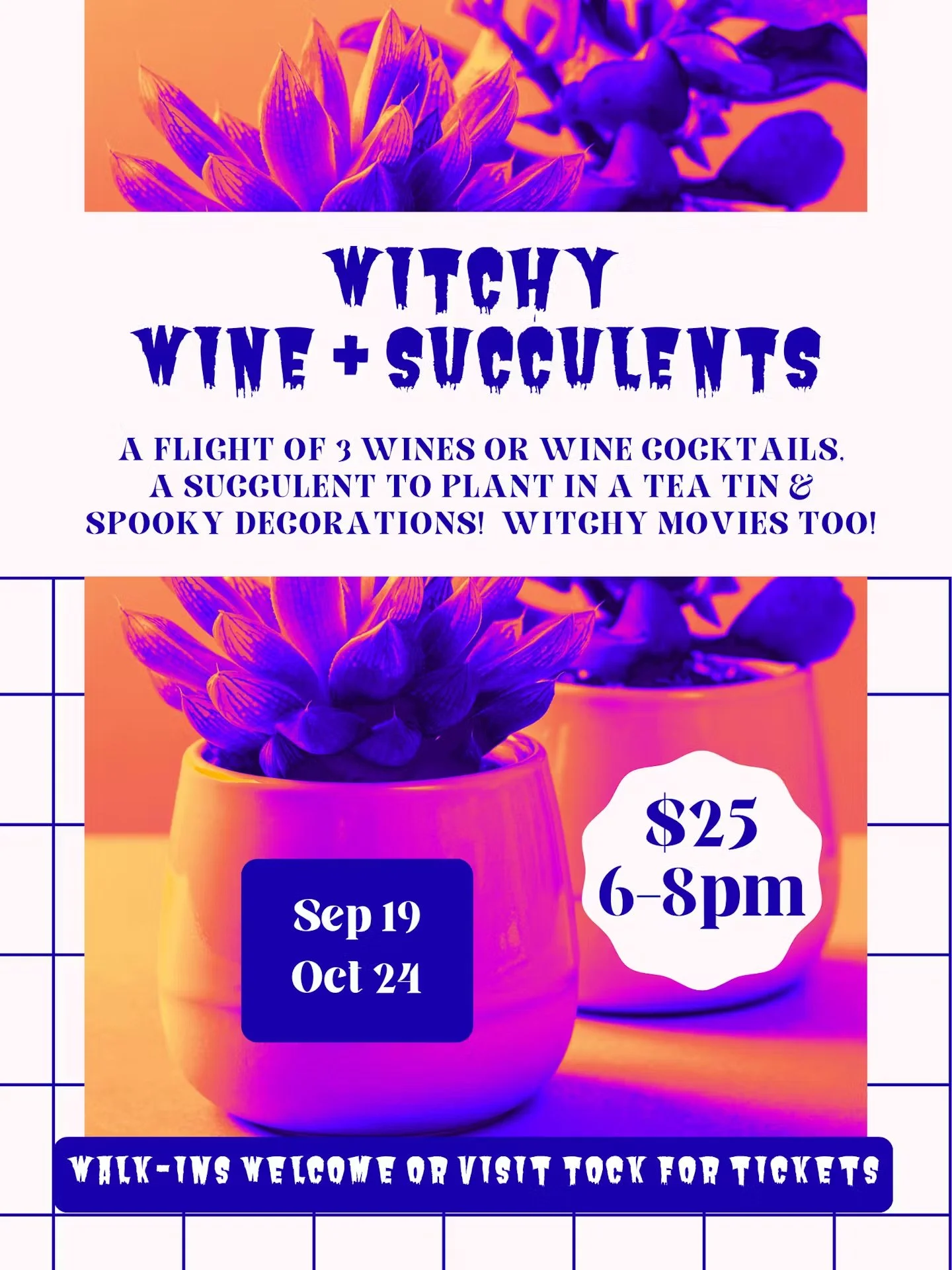
I will be at Halcyon’s Lower Greenville location offering Tarot Readings during their Witchy Wine + Succulents event!
With your ticket, you get a wine flight, a succulent plant to decorate, and a lovely spooky time with movies, decorations, and community! Each Tarot Session I offer will be 15 minutes for $15.
Walk-ins are welcome, or click here to pre-purchase your ticket and save your spot!
I hope to see you there!
REFERENCES
Footnotes:
When writing, I use g-d in place of “God” simply as a nod to my personal belief system around language, divinity, and the sacred.
The omni-g-d is a philosophical concept that speaks to the traditional conception of g-d being one that is omnipotent, omniscient, and omnipresent, as well as omni-benevolent, omnisapient, and omnificent. The omni-g-d is required in many popular religious traditions, such as Christianity.
There is a vast and expansive tradition in mythology and creation stories specifically around Ceres that also relates to Tarot. If you’re curious, I would look into creation myths around Inanna, Lilith, and the connection / morphing nature of g-ddesses across time. I have not created anything about this specifically, but let me know if you would be interested in this!
Citations:
“Create - Etymology, Origin & Meaning.” Etymonline, www.etymonline.com/word/create. Accessed 16 Oct. 2025.
King, Thomas. The Truth about Stories: A Native Narrative. House of Anansi Press, 2011.
Learn More:
My Video on Worldview and Paradox, “Don’t Solve the Paradox – Live It.” https://www.youtube.com/watch?v=J8eEHx7kDLg
Learn More About Aboriginal Australian Dreamtime from Rune Soup: https://www.youtube.com/watch?v=6X_lc8ClheA&t=2s
Learn More About Yahweh from Esoterica on YouTube: https://www.youtube.com/watch?v=mdKst8zeh-U


